

























Who Invests in SaaS Startups?
SaaS generally attracts more investor interest than almost any other category and it’s easy to see why. Recurring subscription revenue is easier to predict, gross margins are often high and a working product can scale to many customers without adding too much cost. That combination is powerful, and it’s exactly what many investors look for.
A SaaS investor is any angel investor or venture capital firm that invests in software-as-a-service companies, and they usually fall into a few groups.
Angel investors invest smaller amounts and they usually come at pre-seed or seed. Angels often bring experience from their own SaaS companies. Seed VC funds and micro-VCs make early, concentrated bets and are usually hands-on. SaaS-focused venture capital firms invest across seed to Series A and beyond, and specialize in scaling recurring-revenue platforms. Private-equity firms come in later, once there's meaningful ARR to scale or optimize. Corporate venture arms such as Salesforce Ventures or Google Ventures invest strategically alongside their platforms. And vertical SaaS specialists back software built for one industry, like health care, legal or construction, where domain knowledge matters more than general software experience.
Knowing which type fits your stage and model saves you from pitching the wrong people.
How to Find SaaS Investors That Match Your Startup
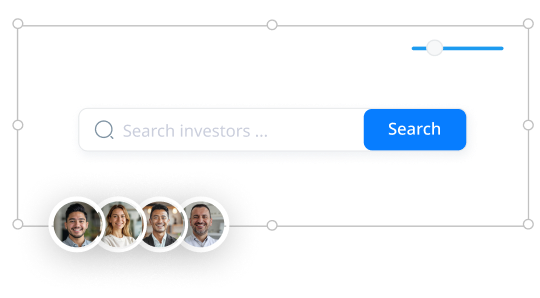
There are thousands of investors who say they invest in SaaS startups, so your goal is not to build the longest list. It’s to build the most relevant one. Using a high-quality, updated investor database can help you quickly narrow the list instead of researching investors manually.
Start with your sub-vertical. SaaS is a broad category, and some investors back horizontal B2B tools, while others focus on vertical SaaS, developer platforms or SaaS-enabled marketplaces. Filter for investors who back your specific type of SaaS company first.
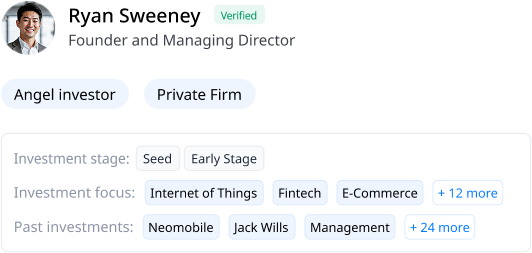
Then select your investment stage. A pre-seed angel investor and a growth-stage fund look for completely different things in a company, which is why filtering by stage matters. At seed and later stages, you should also look closely at past investments. Investors who have funded SaaS companies with a business model similar to yours may be more likely to engage.
Next, filter by location, such as country, state, city or region. Some investors prefer to invest locally, while others invest internationally.
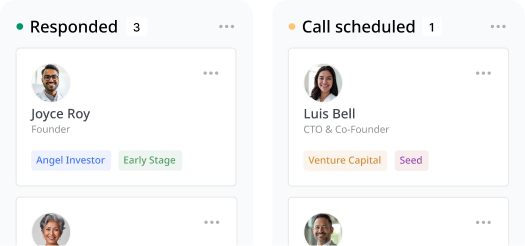
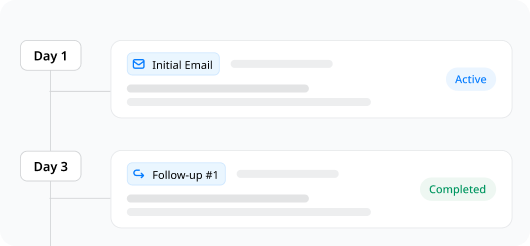
Once you’ve built your list in the Angel Match database, bulk-select the investors and add them to your CRM. Then run your email outreach and follow-ups from there. You can track opens, replies and investor communications in one place.
SaaS Venture Capital Investors vs Angel Investors
SaaS startups usually raise money from a mix of investor types, and it helps to know which ones you should approach when raising your round.
Angel investors invest their own money, usually in smaller amounts. They can often make decisions quickly, and in some cases you may raise money after only one or two conversations. Many SaaS angels are former founders or people with experience running SaaS companies, so they can add practical value beyond just providing capital.
SaaS venture capital investors and micro-VCs invest from a fund. Their checks are usually larger, and they tend to have stricter due diligence processes, which can make them harder to raise from than angel investors. VCs can also bring more than capital. Many people working in venture have operating or founder experience and can help with hiring, strategy, introductions and future fundraising.
Two other investor types also show up often in SaaS. Well-known accelerators such as Y Combinator and Techstars combine a small seed check with a program, mentorship and access to a wider investor network.
Many SaaS rounds include several of these investor types, with a lead investor setting the terms and angels or smaller funds filling the rest of the round. The Angel Match database lets you filter by investor type, so you can build separate lists for each.
Notable SaaS Investors and Venture Capital Firms
The Angel Match database includes thousands of investors who back SaaS startups, from individual angel investors to large private equity firms. A number of well-known VC firms are especially active in software and can be useful reference points when researching who invests in your space:
-
Bessemer Venture Partners: A long-time cloud and SaaS investor that’s known for its Cloud Index and SaaS benchmarks.
-
Insight Partners: A software specialist that invests from early stage through growth.
-
Sequoia CapitalandAccel: Multi-stage VC firms with deep SaaS portfolios from seed to late growth stages.
-
Battery Ventures: Backs both infrastructure and application SaaS apps with strong operational support.
-
Point Nine: An early-stage VC firm focused on B2B SaaS and marketplaces.
-
Emergence Capital: An enterprise SaaS VC fund that’s behind several category leaders.
These are only examples. The right investor will be different for every startup and depends on your stage, SaaS sub-vertical, industry, location and traction. Investor focus can also change over time, so it’s always a good idea to review the firm’s website, recent investments and current thesis before reaching out.
The SaaS Metrics Investors Care About
This is where SaaS fundraising is different from most other markets. Investors who back SaaS companies look at a specific set of numbers, and being familiar with them is half the battle. Which metrics matter most depends on your stage, but these are some of the ones that come up often:
Annual recurring revenue (ARR) and growth rate:
Once you
start getting revenue, your ARR growth rate becomes the single strongest
selling point. Benchmarks are different across investment stages, but
investors want to see that you’re doubling at least every year in ARR.
Net revenue retention (NRR):
This is a metric that shows
how much revenue you keep and expand from existing users. Above 100% means
your base grows even without new companies being added, which is often a
strong signal. If you get 120%+, then you are in the top-tier. Below 100% will
raise questions.
Example:
Say you
start the year with $100,000 in recurring revenue from
existing customers:
-
Customers upgrade and add $30,000
-
Downgrades reduce revenue by $10,000
-
Cancellations reduce revenue by $15,000
You end with $105,000 from that same customer group.
Your NRR would be:
$105,000 ÷ $100,000 = 105%
CAC payback and LTV:CAC:
Investors want to see that a
customer pays back their acquisition cost reasonably quickly and is worth
several times more than they cost to acquire. A lifetime value of at least 3x
CAC is a common reference point.
Gross margin. Healthy SaaS margins sit in the 70–90% range. Much lower, and investors will ask whether it's really a software business.
Churn. Both logo churn and revenue churn matter, because high churn signals a weak product or poor fit. If retention isn't strong yet, it helps to understand why and have a plan to fix it.
Capital efficiency and the Rule of 40. Since the 2022–2023 correction, investors care much more about efficient growth than growth at any cost. The Rule of 40 (growth rate plus profit margin adding to 40 or more) and burn multiple are common ways they check that.
Beyond the numbers, they look at founder-market fit, your go-to-market motion (product-led vs sales-led), and whether the product is defensible. Weak metrics with a great story rarely get past the first meeting, and strong metrics with a clear story often do.
SaaS Funding by Stage: Pre-Seed to Growth
Because SaaS investors specialize by stage, it helps to know roughly what each stage of SaaS investment expects. These are general reference points, not rules, and they vary by market and how in-demand your space is.
Pre-seed: Idea or MVP, usually pre-revenue. Investors fund the founder, the wedge and early validation. Checks often range from around $100K to $1M.
Seed: Early traction with a product in market, typically somewhere from $0 to about $1M ARR. Investors want early product-market fit signals and a credible path to a repeatable sales motion. Rounds often fall in the low single-digit millions.
Series A: Usually around $1M–5M ARR with a sales motion that's starting to repeat and solid retention. This is where NRR, CAC payback and growth rate get scrutinized hard. Checks commonly range from about $5M to $25M.
Series B and beyond: Rapid scaling on a proven model, with strong NRR and CAC efficiency expected. Rounds and check sizes grow accordingly.
Growth and private equity: Later capital for companies with meaningful ARR (often $10M+), where the focus shifts toward profitable growth, margin and a path to exit.
Matching your raise to the stage you're actually at, rather than the round size you saw a competitor announce, is what keeps a fundraise focused.
How to Reach Out to SaaS Investors
Lead with your strongest metric. For SaaS that's usually ARR growth or NRR, so put it in the first two lines of your email instead of opening with a vision statement. Investors skim, so the number that makes them lean in should be the first thing they see.
Keep the first email short. Its job is to get a call, not close the round. Say what your software does in one clear sentence, name the customer, and include two or three real metrics. Then explain why you're emailing that specific investor, referencing a SaaS company in their portfolio or their stated focus, because generic blasts get ignored. Link your deck, end with a clear ask, and follow up two or three times.
Warm introductions convert better than cold outreach, so use them where you have them. But strong metrics travel, so a well-matched cold email with real numbers still works.
 Seed investors


