



















Sweden's Seed Investors, by the Numbers
Sweden is a small country with an outsized startup track record, and its seed investor base reflects that. There are 400+ seed-stage investors tagged to the country in AngelMatch, and the mix leans heavily toward angel individuals, who make up the largest single group, ahead of venture capital partners and private equity backers. That matches what founders on the ground tend to say: your first check in Sweden is more likely to come from an operator-turned-angel than a fund, and a lot of those angels are former founders who sold or scaled a company of their own before they started writing checks into other people's.
That density of investors is not an accident. Swedish startups raised about 2.4 billion euros in venture capital in 2024, and Swedish tech companies took in roughly 8.4% of all European tech funding that year, good for second place across the entire continent. A country of about 10 million people punching that far above its weight is exactly why so many funds, both Swedish and international, keep a standing seed-stage presence here rather than flying in only when a deal gets big.
Look at what these investors actually back and a pattern shows up fast. B2B and information technology are the two biggest categories, with fintech investors close behind, no surprise in the country that produced Klarna and iZettle. Consumer internet, software, and e-commerce round out the top tier. If your startup sits in one of those lanes, you are pitching into a market that already knows how to evaluate a company like yours.
Geography matters too. Stockholm is the center of gravity, and about half of Sweden's seed-stage investors are based there or invest primarily into Stockholm-headquartered companies. That does not mean you need to be in Stockholm to raise. Gothenburg has a strong deep-tech and industrial-tech cluster, built up around the city's automotive and engineering history, and it is a good place to look if your startup is closer to hardware or heavy industry than pure software. Malmo benefits from spillover interest from Copenhagen just across the Oresund bridge, and a fair number of Nordic-focused funds treat the two cities as one connected market. If your outreach list is thin, though, Stockholm is still where it should start.
It also helps to know how Sweden tags its stages, because the lines blur more than you would expect. Sweden shows slightly more investors under early-stage venture than under seed specifically, and there is a real pre-seed bench too, usually the same people writing smaller first checks before they write seed-sized ones. In practice, that means the seed, pre-seed, and early-stage venture pools in Sweden overlap heavily. If your search under one label comes back thin for your sector, it is worth checking the others before you assume the money is not there.
Who's Writing Seed Checks in Sweden
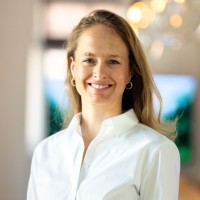
As of 2026, a few names come up again and again when founders talk about early-stage capital in Sweden. Sophia Bendz is one of them. She spent seven years running global marketing at Spotify before turning to investing, first at Atomico and now as a partner at Cherry Ventures, where she focuses on seed-stage companies across Europe. She has also made more than 40 personal angel investments on the side, so she shows up in Sweden's investor base in both capacities.
Niklas Adalberth is another. He co-founded Klarna, stepped back from day-to-day operations in 2015, and put a large share of his fortune into Norrsken, a Stockholm-based foundation and venture fund built around tech-for-good and impact startups. Norrsken's second fund closed at 320 million euros, making it the largest early-stage generalist impact fund in Europe, and it is one of the more active checks a Swedish founder working on a hard problem is likely to encounter.
You will also run into Almi Invest a lot. It is a government-backed investor, not a private fund, and it is by most counts the single most active early-stage investor in the country. Almi tends to co-invest alongside private venture capitalists rather than lead on its own, so a term sheet from Almi is often a signal that a private round is coming together, not a replacement for one. Beyond individual names and funds, the Swedish Business Angels Network gives founders a more structured way in, connecting startups with vetted, high-net-worth individuals rather than relying on a single warm introduction to carry the whole search.
What Sweden's Seed Investors Look For
Sweden's domestic market is small, about 10 million people, and every serious investor here knows it. That shapes what they want to hear in a pitch. A plan that only works if you dominate Sweden will get politely declined. A plan that uses Sweden as a fast, well-instrumented test market before expanding across the Nordics or into the rest of Europe reads as credible, because that is the playbook Klarna, Spotify, and iZettle all ran.
Capital efficiency also carries more weight here than in markets with deeper venture pools. Swedish seed investors tend to ask pointed questions about burn and runway before they ask about total addressable market, and a founder who can answer that cleanly stands out. If you have not run the math recently, it is worth doing before your first meeting, not during it.
If your round leans earlier than a typical seed check, Sweden also has a solid pre-seed bench, often the same angels who write seed checks, just writing smaller ones first. And Sweden actually tags more investors under early-stage venture than under seed specifically, so if a seed-only search feels thin for your sector, widening to early-stage venture is a reasonable next step rather than a sign the market is empty.
On check size and dilution, Sweden does not run by different rules than the rest of Europe or the US. Angel checks here typically land in the same $25,000 to $500,000 range you would see anywhere, and a Swedish seed round giving up somewhere around 15% to 25% of the company is normal, not aggressive. Before you set a number, it is worth running your own valuation numbers so you walk in with a defensible range instead of a guess.
One more practical detail: most Swedish startups raising from these investors are structured as an aktiebolag, the standard Swedish limited company, and investors here are used to working within that structure rather than a US-style Delaware entity. If you are a foreign founder building for the Nordic market first, expect questions about where the company is actually incorporated early in the process, not as an afterthought during due diligence.
Timing and Approach: Reaching Seed Investors in Sweden
Sweden takes summer seriously. Most of the country, investors included, slows down hard from late June through early August, with Midsummer weekend in particular treated as close to a national shutdown. Sending your first cold outreach in the second week of July is a fast way to sit unread for a month. Late August through November and January through May are far more reliable windows.
English works fine for a pitch. Sweden has one of the highest English proficiency rates in Europe, and most Swedish funds, including the ones backed by international LPs, run their process in English by default. You do not need a Swedish-language deck, and trying too hard to localize can read as unnecessary.
The scene is also small and tightly networked, especially in Stockholm, so a warm introduction still beats a cold email more often than not. If you can get one angel or operator in your sector to make an introduction, it tends to open several more doors at once. Founders and former operators from Klarna, Spotify, and iZettle now sit on a lot of cap tables and angel lists, and a lot of Sweden's seed activity still traces back to that network of people who built companies here before. That is one more reason a targeted, well-researched list beats a mass email blast in this market specifically.
Sweden's seed scene rewards founders who show up with a clear expansion story and a tight handle on their numbers, not the loudest pitch in the room. Once you have a shortlist of Sweden-based investors who back your sector, get your deck into a shape you can share and track before your first meeting, so you know who actually opened it and how far they got.
 Seed investors


