

Top 5 Angel Investors and VC Firms in South Dakota


South Dakota pairs a stable, low-unemployment economy with a small but active network of private equity firms, venture capital firms, and angel funds. The state's unemployment rate has stayed near 2%, among the lowest in the country.
Most individual investors in the state now fund startups through angel groups rather than writing checks on their own, so this list covers the firms and funds actually active in South Dakota today: top angel investors and VC firms in South Dakota.
Top 5 Angel Investors and VC Firms in South Dakota
Here is the list of the top investment firms and angel funds active in South Dakota. A few are private equity or venture capital firms; two are member-managed angel funds. Investor type is noted for each so you know who you are pitching.
Bluestem Capital
Website: Bluestem
Investor Type: Private Equity Firm
Investment Interests: Healthcare, Medical Devices, Real Estate, Manufacturing
Investment Stage: Early to Late Stage
Bluestem Capital was founded in 1989 by Paul Schock and Steve Kirby. The firm is a private equity company based in Sioux Falls and has made 65 investments and 29 exits to date.
Bluestem focuses on ventures that can promise profitability and introduce something unique to the market, generally avoiding companies at the earliest, pre-revenue stage.
The investment range of Bluestem Capital ranges from $500,000 to $3M. Notable portfolio companies include:
Zerigo Health, Inc.: Zerigo Health has developed a connected phototherapy system that uses an app on the patient's own smartphone (iOS or Android) to manage the dose, frequency, and duration of targeted narrowband UVB (NB-UVB) light therapy.
Equinox: Equinox is a medical device company with an adjustable, non-surgical, non-pharmacological technology to treat diseases of the optic nerve such as glaucoma, idiopathic intracranial hypertension (IIH), hypotony, visual impairment, and intracranial pressure (VIIP).
Orasis Pharmaceuticals: Orasis is an ophthalmic pharmaceutical company that developed Qlosi, an FDA-approved prescription eye drop for presbyopia, an alternative to reading glasses.
Homegrown Capital Partners
Website: Homegrown Capital
Investor Type: Venture Capital Firm
Investment Interests: B2B Software, AgTech, FinTech
Investment Stage: Seed to Series A
Headquartered in Brookings, Homegrown Capital was founded in 2021 by General Partners Tim Weelborg and Matt Paulson. The firm leads or co-leads Seed to Series A rounds with $500,000 to $2 million checks and takes board seats in its portfolio companies.
Homegrown Capital invests close to home, focusing on technology-driven founders in the Midwest and Northern Plains who do not face heavy regulatory hurdles.
Some of their portfolio companies are:
Thread: Thread is an online personal styling platform. The company raised a $15 million Series A round with participation from Homegrown Capital.
School of Traditional Skills: The School of Traditional Skills is an online, subscription-based video education platform connecting people who want to learn traditional skills with instructors. A Homegrown Capital partner sits on its board.
Sentinel Fertigation: Sentinel Fertigation is an AgTech company specializing in nitrogen management solutions for farmers. Its N-Time platform turns crop imagery into fertigation recommendations. The company closed a $2.5 million seed round co-led by Homegrown Capital, Grit Road Partners, and Invest Nebraska.
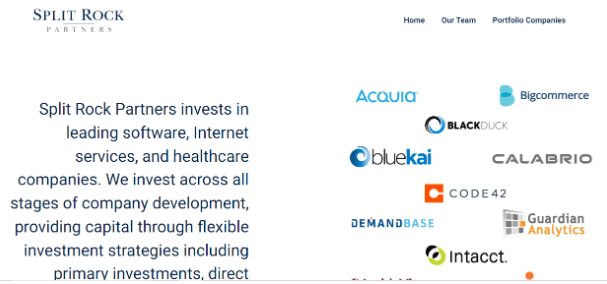
Split Rock Partners
Website: Split Rock
Investor Type: Venture Capital Firm
Investment Interests: Software, Internet Services, Healthcare
Investment Stage: Seed through Growth Equity
Founded in 2004 by David Stassen, Jim Simons, and Michael Gorman, Split Rock Partners is a venture capital firm headquartered in Eden Prairie, Minnesota. The firm invests in emerging healthcare, software, and internet services companies across the Upper Midwest and West Coast.
Split Rock invests across all stages of company development, from seed and angel rounds through growth equity, typically writing checks between $2 million and $40 million.
Among their investments, some portfolio companies are:
Acquia: Acquia is an open-source digital experience company that empowers brands to create customer moments that matter.
Demandbase: Demandbase is an account-based marketing (ABM), advertising, sales intelligence, and data company.
Falls Angel Fund
Investor Type: Angel Fund
Investment Interests: Industry-Agnostic
Investment Stage: Early Stage
Falls Angel Fund is a member-managed angel fund founded in 2016. It was a joint effort between the South Dakota Enterprise Institute and local investors John Henkhaus, Steve Sarbacker, and Matt Paulson, who chairs the fund.
Falls Angel Fund invests in early-stage companies based in South Dakota or the surrounding region. The group is industry-agnostic and looks closely at a company's viability and growth potential, and whether the founding team can push through setbacks.
The investment range of Falls Angel Fund is between $25,000 and $500,000, though individual deal sizes are not disclosed. Among their investments, some notable portfolio companies are:
Prismatic: Prismatic is a Sioux Falls-based software development company. It raised a $3.25 million seed round with participation from Falls Angel Fund.
Oska Wellness: Oska Wellness makes an electromagnetic pain-relief device. The company raised $5.5 million in a funding round that included Falls Angel Fund alongside other healthcare-focused individual investors.
Myriad Mobile: Myriad Mobile is a mobile and web application development firm. It raised $1.5 million led by Gen7 Investments, with Falls Angel Fund among the participating investors.
Black Hills Regional Angel Fund
Investor Type: Angel Fund
Investment Interests: Scalable, Technology-Differentiated Businesses
Investment Stage: Early Stage
Black Hills Regional Angel Fund is a Rapid City-based angel fund managed by the South Dakota Enterprise Institute. It is funded entirely by local accredited investors in the Black Hills region and is now on its third fund, formed in 2021.
The fund looks for scalable companies differentiated by technology or a first-mover advantage, and it does not invest in retail stores, restaurants, food trucks, service businesses, or real estate projects.
The fund has previously teamed up with Falls Angel Fund and Hub City Capital, two other South Dakota Enterprise Institute-managed angel funds, to co-invest in larger in-state deals. Its portfolio includes Nanopareil, a biotechnology company that raised a seed round with participation from the fund.
Wrap-Up:
In conclusion, if you are pitching any of these South Dakota investors, brush up on how to pitch to angel investors first. Understand each firm's investment interests, investment range, and stage preferences before you reach out, and use AngelMatch's investor directory to find other investors who fit your startup's profile.
Good Luck!
Frequently Asked Questions
Are most South Dakota investors angels or venture capital firms?
It is a mix. South Dakota has a handful of private equity and venture capital firms, such as Bluestem Capital and Homegrown Capital, alongside member-managed angel funds like Falls Angel Fund and Black Hills Regional Angel Fund. Many individual investors in the state now fund startups through these angel funds rather than investing directly on their own.
How much do South Dakota angel funds typically invest?
South Dakota's angel funds generally write smaller checks than the state's private equity and venture firms. Falls Angel Fund invests between $25,000 and $500,000 per company, while firms like Bluestem Capital and Split Rock Partners typically invest $500,000 or more.
What industries do South Dakota investors favor?
Healthcare and medical devices, agriculture technology (AgTech), B2B software, and fintech come up most often among active South Dakota investors. Angel funds like Falls Angel Fund and Black Hills Regional Angel Fund are industry-agnostic but favor scalable, technology-differentiated companies over service businesses or real estate.
How do I get in front of South Dakota's angel funds?
Pitching angel investors well starts with a compelling business plan and a clear pitch. South Dakota's angel funds are managed through the South Dakota Enterprise Institute, so understanding startup stages and having a credible team and revenue model in place will help your application move forward.


